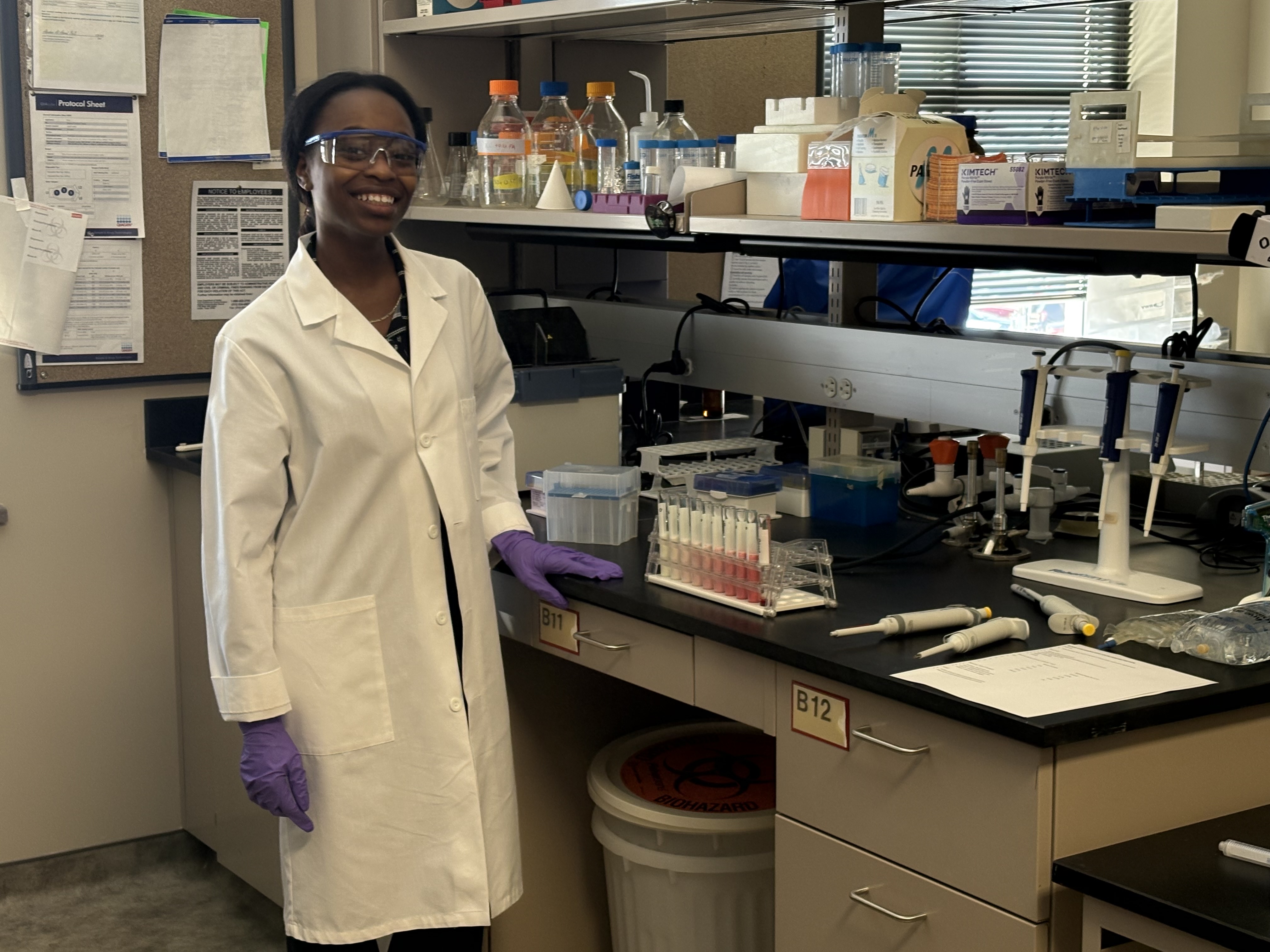
Breast milk doesn’t always look the way we expect. Sometimes it’s pink, yellow, green, or even described as “neon”. And when that happens, it can feel alarming.
The good news: in most cases, these color changes are normal.
Objective: To better understand what moms are seeing and what might explain it.
What We Learned from Moms
We started with a survey of breastfeeding moms who reported changes in milk color. From that survey, we learned that color changes are more common than expected and moms often have ideas about what may have contributed.
It is important to note that this was a survey, not a controlled experiment. That means we cannot determine cause and effect; however, we can identify patterns and generate hypotheses. Our report on the survey was accepted for publication in the Journal of Human Lactation and will be out soon.
What We Tested in the Lab
After reviewing the survey results, a few questions stood out:
- How much blood would actually make milk look pink?
- Could vitamins help explain the bright yellow or “neon” milk moms described?
We did some simple visual demonstrations to explore these ideas and to provide visual context for hypotheses generated from survey data.
How much blood makes milk look pink?
Moms were most concerned about red or pink milk. Acknowledging this concern, we wondered, “how much blood does it take to turn milk pink?” So, we tested it out in our lab.
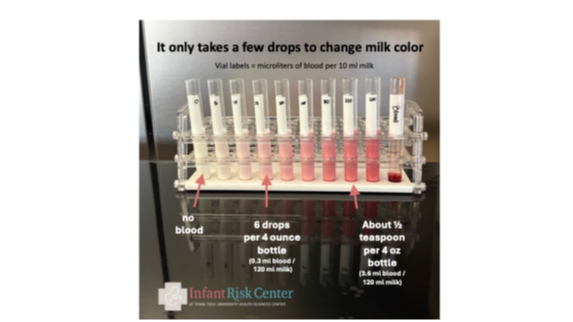
Each tube contains 10 mL of milk with increasing amounts of blood. Even very small amounts create visible color changes.
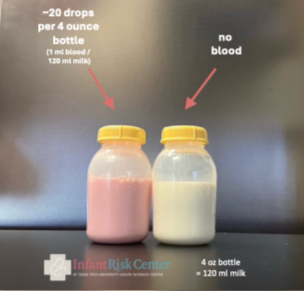
This visibly pink bottle contained about 1 mL of blood in 4 oz (120 mL) of milk
Question: How much blood does it take to turn milk pink?
Answer: Less than 1% blood can noticeably change the color of milk.
Is Blood in Milk Harmful?
In most cases small amounts of blood in breast milk are not harmful to a healthy baby. This may occur with nipple irritation or cracking, pumping, and early postpartum changes.
When to check with a provider: Ongoing or worsening bleeding, significant nipple pain, known blood-borne infection (e.g., HIV, hepatitis), frequent clogged ducts or mastitis.
For most families, pink milk looks more concerning than it actually is.
Yellow or “Neon” Milk: What Could be Causing It?
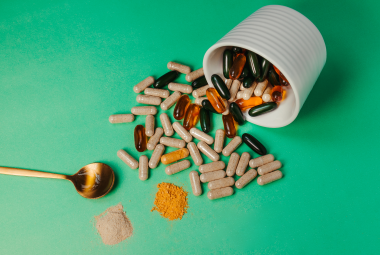
In our survey, some moms described milk as bright yellow, green, “glowing” or neon. Of these, some moms noted taking multivitamins, b-complex vitamins, or riboflavin supplements.
When Dr. Krutsch reviewed these responses, it reminded her of something familiar from hospital pharmacy, a “banana bag,” used to replace nutrients.
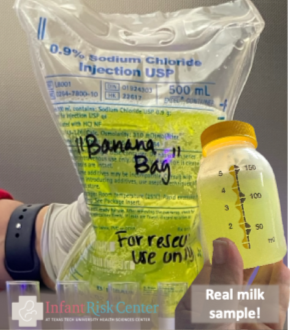
A “banana bag” contains vitamins including riboflavin (vitamin B2), which gives it a bright yellow color. We made a banana bag using the same multivitamin cocktail hospital pharmacies typical use (Infuvite), shown here.
Testing the Vitamin Hypothesis
We explored this idea by adding a vitamin mixture (containing riboflavin) into 10 mL samples of milk.
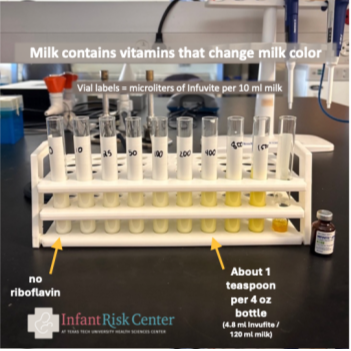
Each tube contains 10 mL of milk with increasing amounts of vitamin solution (starting with 10 mcl and up to 1.5 ml of the multivitamin mix used to make banana bags). The hues most similar to what we see in the submitted photos has the same amount of multivitamins in 1 IV banana bag in a 4 ounce bottle. That is 3.6 mg of riboflavin per 4 ounces of milk…a lot! We suspect riboflavin is actively transported into milk. However, some women take extraordinarily high doses of riboflavin for migraine prevention (400 mg per day), but none have mentioned their neon-green milk to us, so the amount in milk may be variable by person.
Is Riboflavin Safe?
Yes. Riboflavin (vitamin B2) is water-soluble, rapidly cleared from the body, and has no established upper limit for safety. Infants typically need about 0.3 mg per day which is much less than what we added to the milk. However, even at higher riboflavin exposures, no toxicity has been observed.
Why Does it Sometimes Look “Neon”?
Riboflavin has a unique property: it fluoresces (glows) under UV light
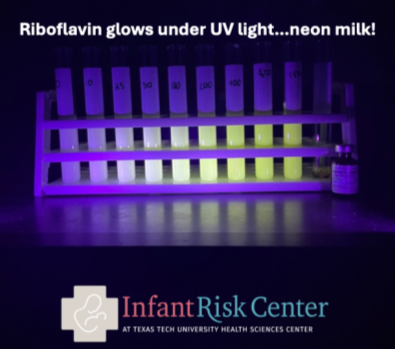
Under UV light, riboflavin glows bright yellow-green. This may help explain why some moms describe milk as neon, glowing, and very bright. While we did not test full bottles, these results show that milk color can be very sensitive to small changes in composition.
Why This Matters
Before publishing our article, most information about milk colors came from isolated case reports and there was limited data in medical literature reflecting real experiences from moms. While lactation consultants understand milk comes in many colors, most healthcare providers don’t know. Our goal is to normalize what parents are seeing, reduce unnecessary worry, and support providers with better context.
Ongoing Research
This project is part of a larger InfantRisk study on breast milk color changes that will be published in the Journal of Human Lactation. The full manuscript includes survey findings from breastfeeding mothers, reported patterns and perceived causes, as well as clinical context for providers. The lab demonstrations shown here help visualize patterns observed in the survey.
Final Takeaway
Breast milk can change color—and in most cases, that’s completely normal.
Often, it only takes a very small change in composition to create a noticeable visual difference. What may look alarming is usually benign.
The most important step is to consider the full picture: maternal diet, supplement use, nipple condition, and overall clinical context—not color alone.
About InfantRisk Research
At the InfantRisk Center, we specialize in helping families and healthcare providers make informed decisions about medications and exposures during breastfeeding.
If you have questions about changes in your breast milk or medication safety while breastfeeding, we’re here to help:
- 📱 MommyMeds App – Designed for moms to quickly check medication safety during pregnancy and breastfeeding
- 🩺 InfantRisk HCP App – A quick clinical decision-support tool for healthcare providers
- 📞 InfantRisk Call Center – Speak directly with experts about medications and breastfeeding
- 📖 Hale’s Medications & Mothers’ Milk – The leading in-depth reference for lactation pharmacology made for breastfeeding specialists
Grace Onaiwu, PharmD Candidate
Krista Savage RNC-MNN BSN IBCLC
Katie Boatler RN BSN
Kaytlin Krutsch PhD PharmD MBA BCPS